Innovator Awards Winning Team: Reducing Surgical Cancellations in Rural Hospitals Through Innovative Preoperative Optimization
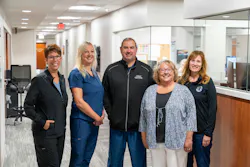

As outpatient total joint arthroplasty becomes more common, rural hospitals must increasingly ensure patients are medically and socially ready before surgery, all while making the most of their limited operating room resources.
To address avoidable same-day cancellations and fragmented preoperative workflows, MN-based Cuyuna Regional Medical Center (CRMC) implemented a registered nurse (RN)-led, electronic health record (EHR)-embedded optimization pathway for total joint arthroplasty patients beginning at surgical scheduling. The preoperative program led to considerably fewer surgical cancellations, and Healthcare Innovation named the project among its 2026 Innovator Award winners.
Over more than five years and involving over 3,500 patients, the program decreased same-day surgery cancellations from 9 percent to 2 percent. This was achieved by proactively identifying clinical and social risks, standardizing perioperative procedures, and coordinating interventions prior to surgery. Developed in a rural Critical Access Hospital, the model highlights how nursing leadership and practical informatics integration can notably enhance surgical readiness, efficiency of the operating room, and patient outcomes without requiring significant capital investment or additional staff.
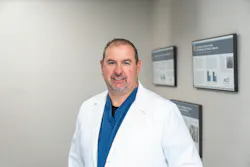
Adam English, CNP, clinical director of orthopedics, explained that as an Epic super user, he learned how to integrate SmartNotes and SmartPhrases and leverage the electronic health record to make the practice more efficient.
“Patients typically don't get cleared by a primary care doctor until seven days before their surgery,” English said. “We often see patients in our orthopedic clinic six months before they have their actual surgery.” The organization wanted to optimize these six months. “If a patient signs up for surgery today, an RN meets with that patient on the same day they sign up for surgery, and we go through all of our pre-operative orthopedic algorithms.” Sometimes it is found that a patient can’t have surgery. This allows the organization to move patients around.
This is a prime example of collaboration
Preoperative education nurses utilize a standardized SmartNote and evidence-based protocols created through collaboration among orthopedics, anesthesia, nursing, therapy, and care coordination teams. They identify clinical and social risk factors early in the surgical process. Their assessments cover medication reconciliation, laboratory and hemoglobin A1c validation, infection risk screening, discharge readiness, and barriers that might delay recovery or same-day discharge. If risk factors cannot be fully managed before surgery, nurses work proactively with schedulers and care teams to reschedule surgery, preventing unnecessary cancellations and ensuring patient readiness.
“Through this working SmartNote,” English emphasized, “we know how to manage medications going in and out of surgery.” Furthermore, he said, “In the world of orthopedics, some you hold six weeks ahead of time, and some you resume a month after.” Finding this out sooner rather than later is key to reducing same-day cancellations.
One orthopedic surgeon, he added, was doing 10 surgeries a month and is now the highest-volume orthopedic surgeon in the Midwest for a single private practice.
This has evolved into a system where the medical center can use prediction models built into a preoperative algorithm to predict whether a patient goes home the same day after surgery, needs to stay the night, or requires an extended rehab stay.
As for challenges, English said that securing initial buy-in from the primary care doctors was one. Helping people get comfortable with technology proved important. “This is a prime example of collaboration,” English added. “You can have a primary care doctor collaborating with a nurse in the orthopedic clinic, collaborating with orthopedic surgeons….it's creating collaboration across hospitals, care managers, social workers, RNs, physical and occupational therapists...”
A major innovation of the program is embedding nursing workflows directly into the EHR. This standardized documentation improves communication among surgeons, anesthesia providers, nursing staff, therapy teams, and external clinicians, while reducing redundant data entry. It also enables quick protocol updates without needing extensive retraining.
CRMC also incorporated a comprehensive Total Joint Care Pathway Guide into the optimization process. Patients are provided with printed educational materials complemented by QR code-linked videos that show CRMC clinicians demonstrating exercises, mobility techniques, incision care, anesthesia information, and recovery expectations. This guide functions as a common reference point throughout the entire surgical process and ensures consistent education across clinic visits, inpatient care, therapy sessions, and home recovery.
The initiative did not require significant capital or extra staff. By utilizing existing nursing skills and internal EHR resources, CRMC created a sustainable and scalable model that has since guided wider preoperative workflows in other surgical service lines.
The innovation has been presented nationally at the American Academy of Orthopaedic Surgeons (AAOS), the Mid-America Orthopaedic Association (MAOA), and the DNV National Symposium.
Learn more about Healthcare Innovation's Annual Innovator Awards Program
Related content:
Meet the 2026 Healthcare Innovation Innovator Awards Winners | HCI Innovation Group
About the Author
 Pietje Kobus-McAllister
Lead Reporter
Pietje Kobus-McAllister has an international background and experience in content management and editing. She studied journalism in the Netherlands and Communications and Creative Nonfiction in the U.S. Pietje joined Healthcare Innovation in January 2024.