Three Healthcare Innovations Earn Gold Honors in 2026 Impact Awards
Key Highlights
- Exagen’s AVISE platform adds biomarkers intended to help clinicians evaluate complex autoimmune conditions when conventional tests are inconclusive.
- Qventus uses AI assistants within EHR workflows to support pre-admission testing and reduce manual coordination; its productivity estimate is vendor-reported.
- Welldoc connects health data with personalized digital coaching and predictive insights for people managing cardiometabolic conditions.
- Together, the Gold winners illustrate different ways technology can support clinicians, patients and healthcare operations.

The 2026 Healthcare Innovation Impact Awards Gold winners represent three distinct approaches to improving healthcare, from helping clinicians evaluate complex autoimmune conditions to reducing administrative burdens in surgical care and supporting patients managing chronic disease.
Exagen Inc., Qventus and Welldoc earned Gold honors for solutions designed to address important clinical and operational challenges. Their work illustrates how innovation can take different forms, including expanding the information available to clinicians, bringing greater efficiency to care delivery and using data and artificial intelligence to support more personalized care.
Here is a closer look at the three Gold-winning solutions.
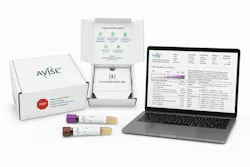
Exagen's AVISE Autoimmune Diagnostic Platform
Autoimmune diseases can be difficult to diagnose, particularly when patients have persistent symptoms but conventional laboratory markers do not provide clear answers. Exagen's AVISE® Autoimmune Diagnostic Platform is designed to help clinicians evaluate autoimmune rheumatic diseases, including systemic lupus erythematosus (SLE) and rheumatoid arthritis.
The company's recent additions to AVISE testing include the T-Cell Lupus Profile, which incorporates biomarkers designed to provide additional information about lupus, and expanded rheumatoid arthritis testing that includes anti-RA33 and anti-PAD4.
These additions address a persistent challenge in autoimmune care: some patients may not show the expected results on conventional tests, potentially complicating diagnosis and delaying appropriate evaluation. By incorporating additional biomarkers, AVISE is intended to give clinicians more information to consider alongside symptoms, examination findings and other clinical evidence.
Data submitted for the awards highlights findings from a 2025 multicenter study in which the combined T-cell biomarkers demonstrated 64% sensitivity for SLE, compared with 35% for EC4d/BC4d and 41% for conventional markers. Among patients who were negative for anti-dsDNA and anti-Smith antibodies and had normal C3/C4 levels, at least one T-cell biomarker was positive in 53%.
For healthcare organizations, the opportunity lies in giving clinicians additional tools to investigate complex autoimmune conditions and make more informed diagnostic decisions.
Learn more about AVISE testing.
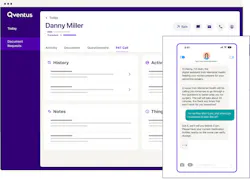
Qventus' Perioperative Care Coordination Solution
Pre-admission testing is an important part of surgical preparation, but it can also require substantial administrative work. Nurses and other team members must gather patient records, review clinical histories, coordinate testing and clearances, and prepare for preoperative conversations while keeping cases moving toward surgery.
Qventus' Perioperative Care Coordination (PCC) Solution uses AI-powered assistants integrated with electronic health record workflows to help manage these tasks. Launched in January 2025, the solution is designed to support pre-admission testing teams by gathering relevant information, preparing staff for patient calls, identifying potential risks and coordinating follow-up activities.
Rather than functioning solely as a dashboard that presents information for staff to review, the platform is designed to carry out administrative tasks within existing workflows. Its approach gives each pre-admission testing team member an AI assistant to help manage the work associated with individual patients.
The goal is to reduce the time staff spend on manual coordination and documentation, allowing nurses to devote more attention to clinical assessment and patient needs. The solution addresses a challenge familiar to many health systems: how to improve operational performance and prepare patients for surgery without adding to the administrative burden on already stretched clinical teams.
For hospitals seeking to improve surgical access, utilization and the patient experience, perioperative coordination is an important area for operational improvement.
Learn more about Qventus' Perioperative Care Coordination Solution.

Welldoc's AI-powered digital health platform
Managing chronic conditions requires more than occasional clinical visits. Patients make daily decisions about medication, nutrition, activity and other aspects of their health, while care teams often work with information distributed across devices, laboratories, pharmacies and electronic health records.
The Welldoc Platform is designed to connect these data sources and provide personalized digital coaching and predictive insights. Its capabilities support people managing cardiometabolic conditions, including diabetes, obesity, hypertension, heart failure and chronic kidney disease.
The platform combines AI-powered support with clinical and regulatory capabilities, including FDA-cleared medical device functions for type 1 and type 2 diabetes management. It is designed to complement care teams rather than replace them, with integration into electronic health records and care management platforms.
One area of innovation is glucose prediction. Welldoc's CGM-informed glucose prediction capability uses continuous glucose monitoring data to forecast glucose trajectories at five-minute intervals, up to two hours ahead. The company also describes a conversational AI agent designed to make personalized guidance more accessible without requiring patients to navigate multiple screens or manually enter extensive information.
The company reports more than 100 peer-reviewed clinical publications supporting its platform. In a cluster-randomized controlled trial cited in its awards submission, use of the platform was associated with a mean A1C reduction of 1.9 percentage points among individuals with type 2 diabetes. Welldoc also reports improved time in range and sustained engagement in real-world deployments.
Learn more about Welldoc.
Recognizing innovation with practical impact
The 2026 Healthcare Innovation Impact Awards Gold winners demonstrate how innovation can address very different needs across the healthcare system. Exagen focuses on adding diagnostic information for complex autoimmune conditions, Qventus targets the administrative work surrounding surgical care, and Welldoc aims to support ongoing chronic disease management through connected data and personalized digital tools.
Each approach reflects a broader challenge for healthcare leaders: identifying technologies that can be integrated into real-world care, support clinicians and patients, and demonstrate meaningful value beyond the promise of the technology itself.
Congratulations to Exagen Inc., Qventus and Welldoc on their 2026 Healthcare Innovation Impact Awards Gold honors.
Related content
Healthcare Innovation Announces 2026 Impact Awards Winners
Three Healthcare Innovations Earn Gold Honors in 2026 Impact Awards
Three Healthcare Solutions Earn Silver Honors in 2026 Impact Awards
About the Author
 Melinda Taschetta-Millane
Market Content Director
Melinda Taschetta-Millane is Market Content Director of Healthcare Editorial, and Head of Content for Healthcare Innovation.